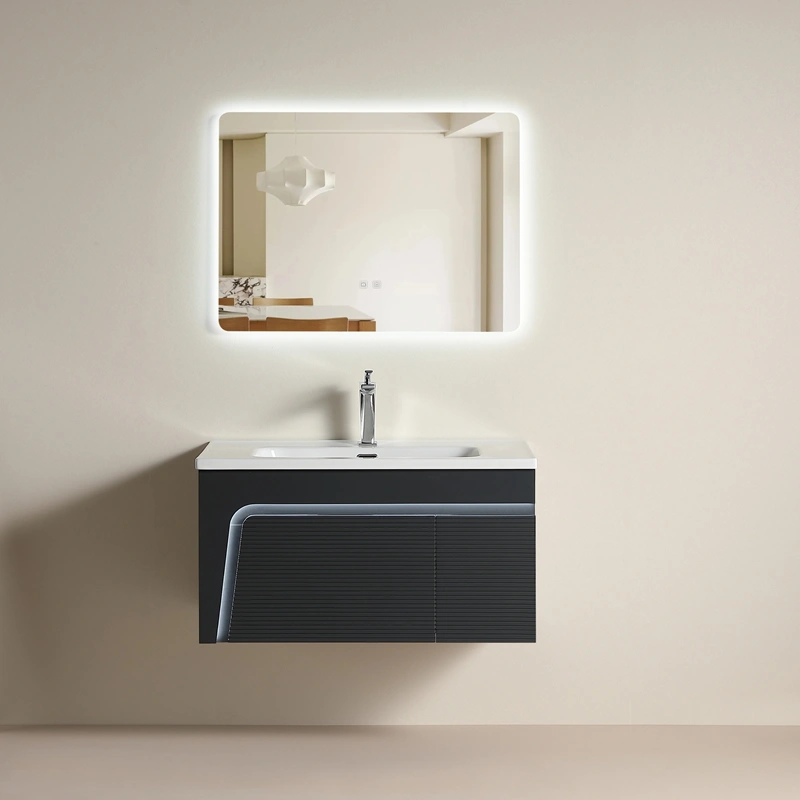
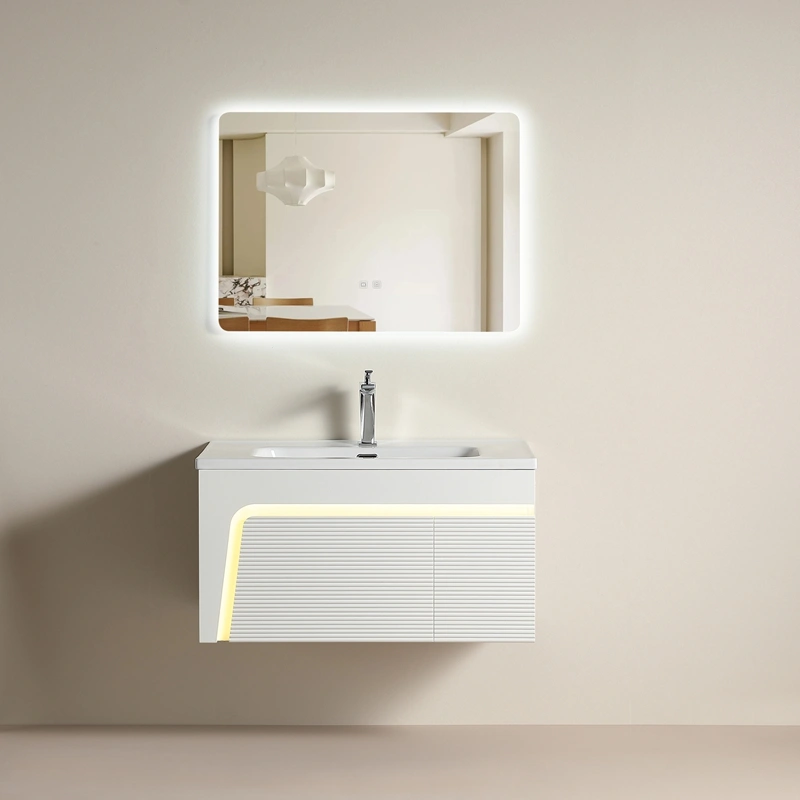
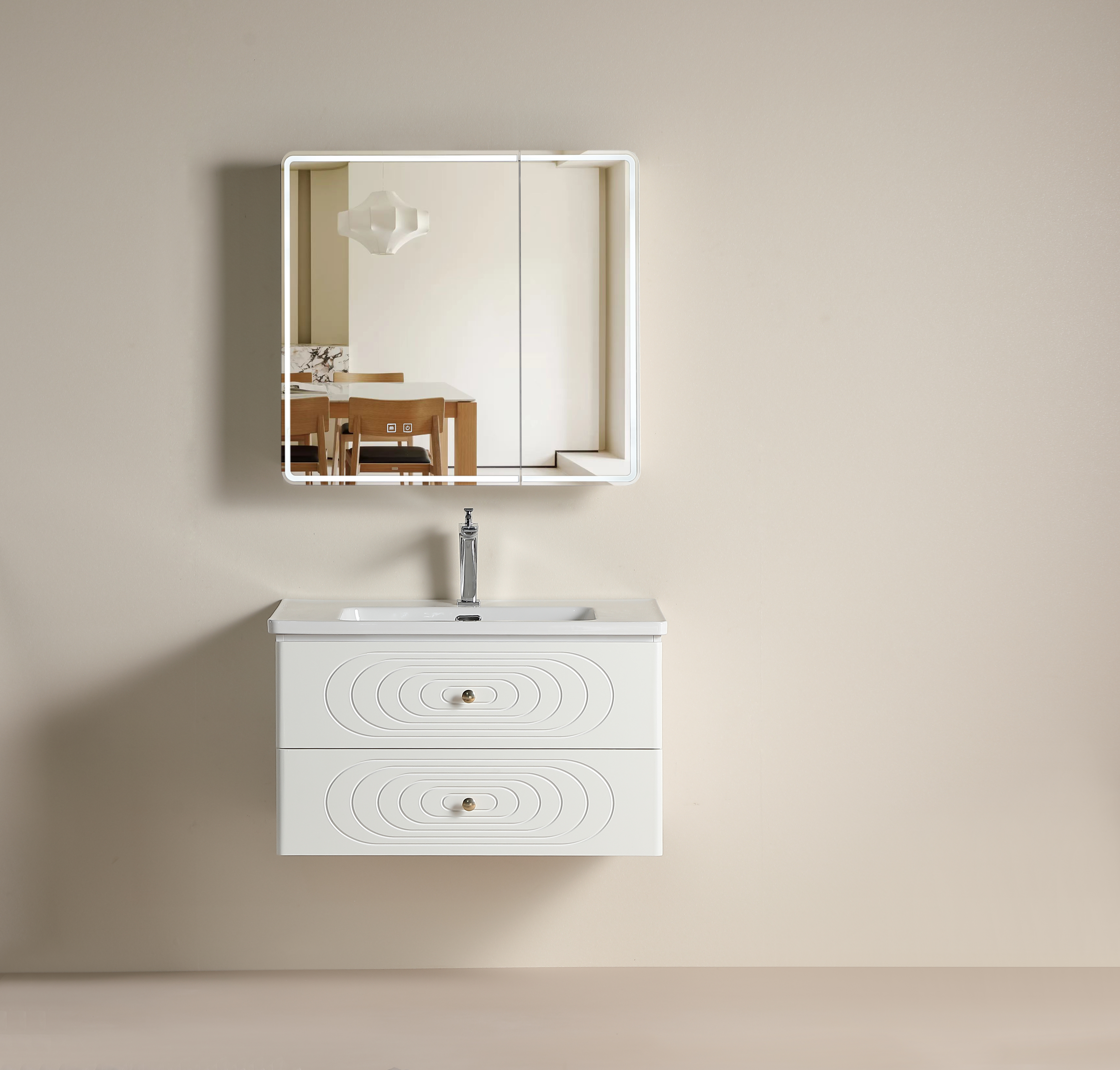
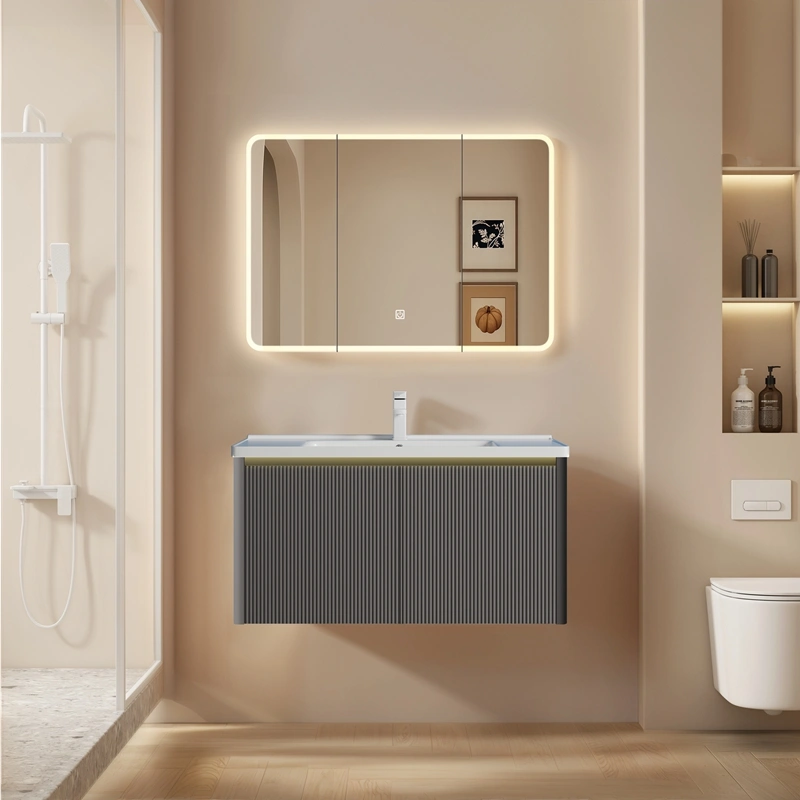
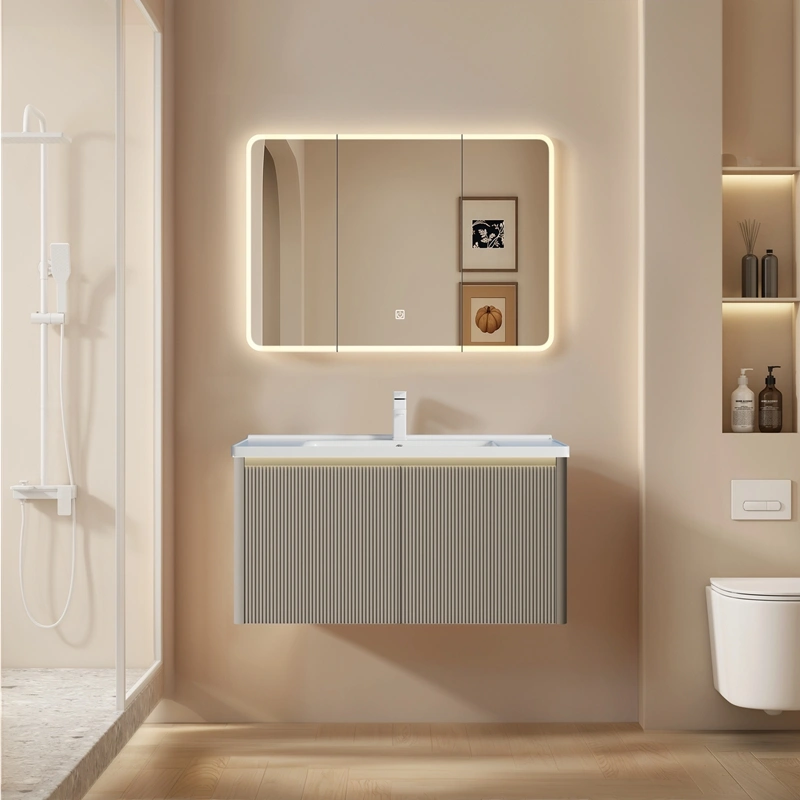
Wall-Mounted vs Freestanding Bathroom Vanity is an important decision for buyers planning residential, hotel, apartment, and commercial bathroom projects. The mounting structure affects floor space, cleaning access, installation requirements, storage, and overall project coordination.
For buyers sourcing wholesale bathroom vanities, the right choice should be based on project conditions rather than appearance alone. This guide compares both options and explains what to check before placing a bulk order with a bathroom vanity manufacturer.
What Is a Wall-Mounted Bathroom Vanity?
A wall-mounted bathroom vanity is fixed directly to the wall, leaving open space between the cabinet and the floor. This floating structure creates a lighter visual appearance and keeps the floor area accessible for cleaning.


Its main consideration is installation: the wall structure, fixing points, cabinet weight, basin, and stored items should all be considered before installation.
What Is a Freestanding Bathroom Vanity?
A freestanding bathroom vanity sits directly on the floor and transfers most of its weight through the cabinet base or legs. It provides a grounded furniture-style appearance and can make full use of the cabinet height for storage.

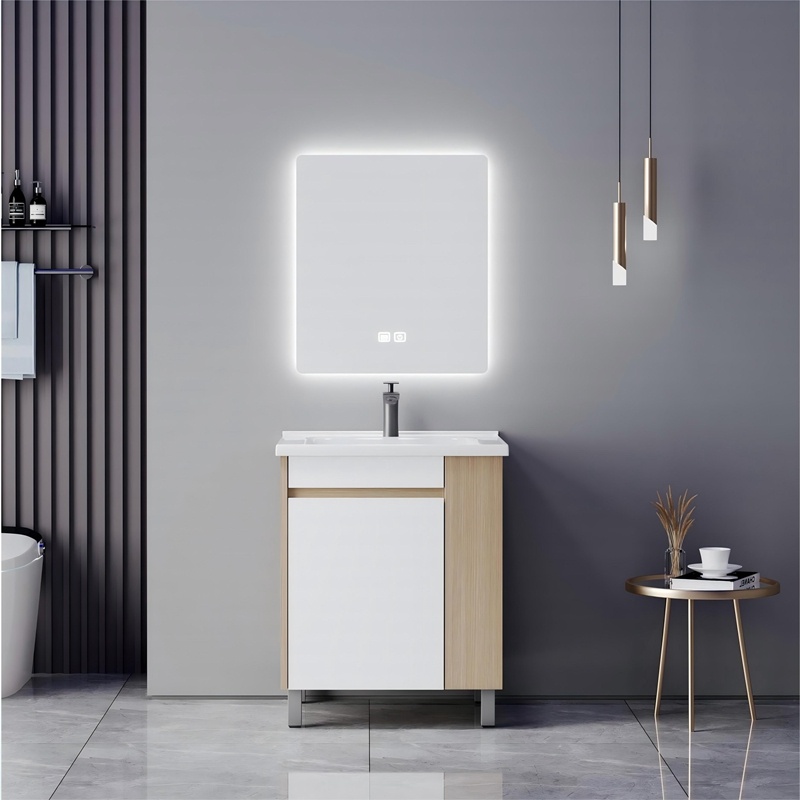
Freestanding designs can be practical when existing floor-level plumbing, renovation conditions or higher storage capacity are important considerations.
Wall-Mounted vs Freestanding: What Is the Difference?
| Facteur | Wall-Mounted Vanity | Freestanding Vanity |
|---|---|---|
| Installation | Requires secure wall fixing | Primarily supported by floor |
| Floor Space | More visible floor area | Uses more floor footprint |
| Nettoyage | Easier underneath | More cleaning around base |
| Storage | Depends on cabinet height | Usually allows full-height storage |
| Visual Effect | Light and modern | Solid and furniture-like |
| Installation Flexibility | Requires wall coordination | More flexible for some renovations |
| Small Bathrooms | Space-efficient option | Can feel more substantial |
| Project Design | Modern and minimalist | Flexible across styles |
| Plumbing | Requires careful wall coordination | Can work with existing floor-level layouts |
| Maintenance Access | Open floor simplifies cleaning | Cabinet base may limit access |
The best structure depends on the room layout, wall condition, storage requirement, installation method and target market. Buyers should evaluate the complete project instead of choosing only by design preference.
When Should Buyers Choose a Wall-Mounted Vanity?
A wall-mounted bathroom vanity is particularly suitable when buyers want to maximize visible floor space and create a clean, contemporary bathroom appearance. The open area underneath also makes routine floor cleaning easier.
Suitable Applications
- Small bathrooms
- Modern apartments
- Contemporary homes
- Hotel bathrooms
- Minimalist projects
- Space-conscious developments
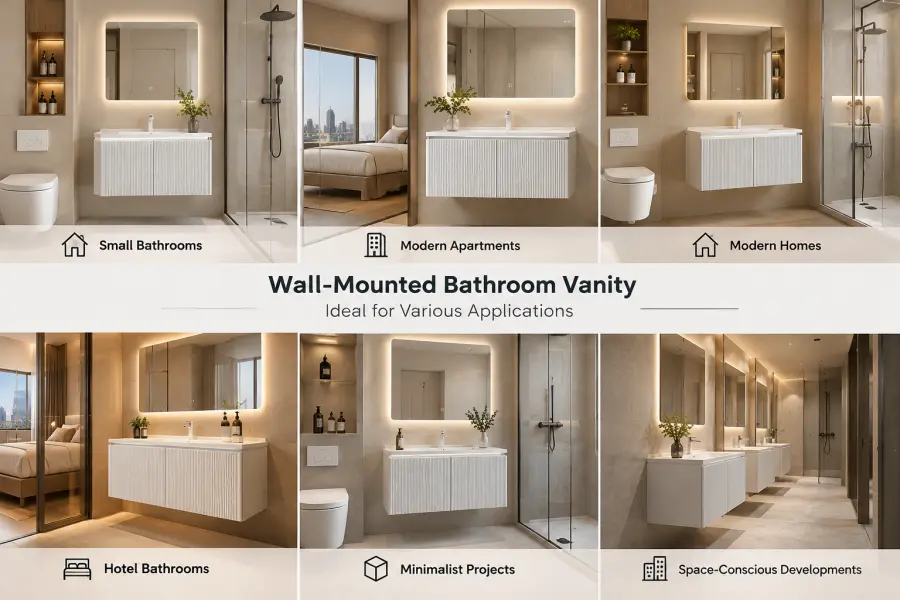
For hotel and apartment projects, the floating structure can help maintain a consistent modern appearance across multiple rooms while making floor cleaning more convenient for housekeeping teams.
When Should Buyers Choose a Freestanding Vanity?
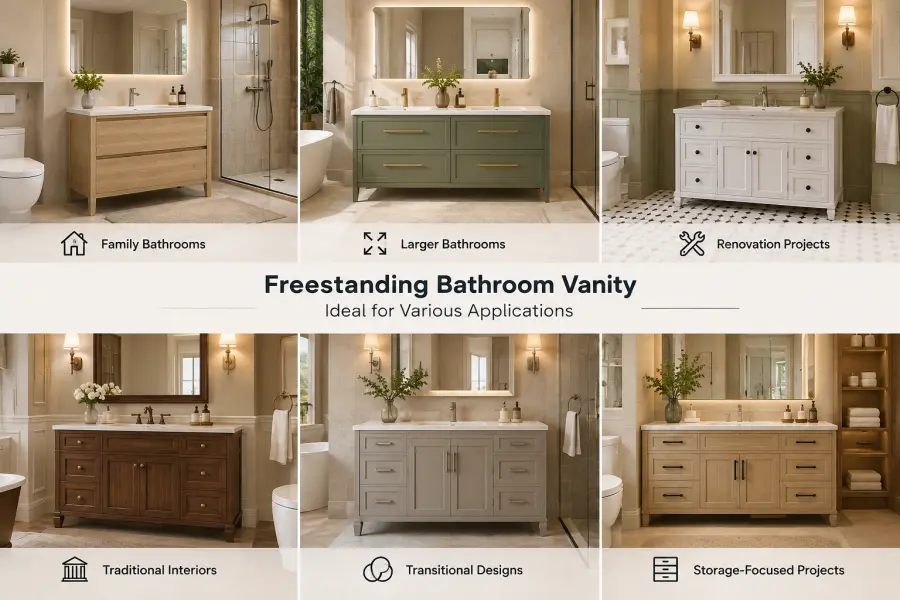
A freestanding bathroom vanity can be a practical choice when storage capacity, existing installation conditions, or a furniture-style appearance are important. Its floor-supported structure can also simplify certain renovation scenarios where major wall modifications are undesirable.
Suitable Applications
- Family bathrooms
- Larger bathrooms
- Renovation projects
- Traditional interiors
- Transitional designs
- Storage-focused projects
Which Vanity Is Better for Hotels and Apartments?
For hotels and apartments, the decision should be based on room layout, wall construction, cleaning requirements, and the design standard of the project. Wall-mounted models can work well when a modern appearance and easy floor access are priorities, while freestanding models can be useful when storage and installation flexibility are more important.
For large projects, buyers should also standardize the mounting method, cabinet dimensions, basin configuration, finishes, and installation details before mass production. This reduces variation between rooms and makes installation more efficient.
What Else Should Wholesale Buyers Check?
Mounting type is only one part of a bathroom vanity specification. Before ordering, buyers should also evaluate material, basin configuration, hardware, finish, dimensions, and quality consistency.
Wholesale Buyer Checklist
- Cabinet material
- Résistance à l'humidité
- Cabinet dimensions
- Basin configuration
- Drawer and door hardware
- Surface finish
- Uniformité des couleurs
- Wall fixing system
- Export packaging
- Quality inspection
For example, a well-designed wall-mounted vanity still needs appropriate wall fixing and stable cabinet construction, while a freestanding vanity still needs reliable hardware, moisture-resistant materials, and accurate leveling.
Can the Mounting Structure Be Customized?
For OEM/ODM projects, buyers can discuss the mounting structure together with cabinet dimensions, materials, colors, finishes, basin configuration, and storage layout. The specification should be finalized according to the target market and actual installation conditions. This is especially useful for bathroom brands and project developers that need different vanity configurations while maintaining a consistent product identity across their collections.
Why Does the Manufacturer Matter?
For B2B buyers, choosing between a wall-mounted and freestanding bathroom vanity is only the first step. The manufacturer must also be able to produce the selected structure accurately, maintain consistent quality, and adapt the product to different project requirements.
A reliable bathroom vanity manufacturer should control key details such as cabinet dimensions, mounting structure, basin integration, material performance, and hardware installation. This is especially important for hotel, apartment, and wholesale orders, where even small specification differences can affect installation efficiency and the consistency of the finished bathroom.
What Should B2B Buyers Check?
| Manufacturer Capability | Why It Matters |
|---|---|
| Structural Production | Ensures accurate wall-mounted or freestanding construction |
| Size Control | Helps match different bathroom layouts |
| Material Options | Supports different market and project requirements |
| Basin Integration | Improves cabinet and basin compatibility |
| Hardware Installation | Supports stable daily operation |
| Quality Control | Maintains consistency across bulk orders |
| OEM/ODM Capability | Allows product specifications to be adapted |
| Production Capacity | Supports long-term wholesale and project supply |
For this reason, buyers should evaluate the manufacturer’s production capabilities together with the product itself. A well-equipped factory can turn a selected vanity design into a repeatable product specification, making it easier to scale from samples to bulk orders.
SEGA combines bathroom cabinet manufacturing with ceramic sanitary ware et Miroir LED production, providing B2B buyers with coordinated products from one manufacturing partner. Its OEM/ODM capabilities also support different sizes, materials, finishes, and product configurations for specific markets and projects. This integrated approach allows wholesalers, distributors, and project buyers to evaluate the vanity not only as a single product, but as part of a complete bathroom solution.
What Can SEGA Provide for B2B Vanity Buyers?
Choosing a bathroom vanity supplier is not simply about finding a product that looks right. B2B buyers need a manufacturer that can turn an approved design into a consistent, production-ready product while controlling specifications, quality, and delivery throughout the order.SEGA is positioned to support this process from product selection and specification confirmation to customization, production, and bulk supply, helping buyers reduce the common risks associated with inconsistent products, difficult installation, and unreliable repeat orders.
Specifications That Work for Bulk Orders
For wholesale buyers, a product specification must be repeatable, not just attractive in a sample. Cabinet dimensions, basin position, door or drawer configuration, and hardware details should remain consistent when the order moves from sampling to mass production.SEGA can work with buyers to confirm the required specifications before production, helping reduce dimensional variation and installation problems when products are supplied in larger quantities.
Material Choices Based on Market Requirements
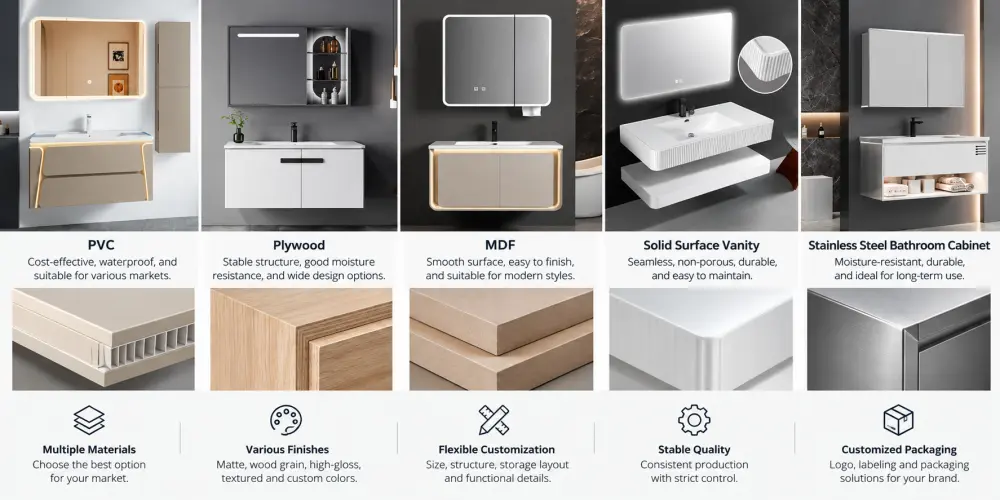
Different markets do not require the same vanity construction. Buyers may prioritize moisture resistance and cost efficiency in one market, while another may place greater emphasis on appearance, durability or premium positioning.SEGA provides multiple material options, allowing buyers to select a cabinet construction that fits the intended market instead of forcing every project into one standard material solution.
OEM/ODM That Solves Real Product Requirements
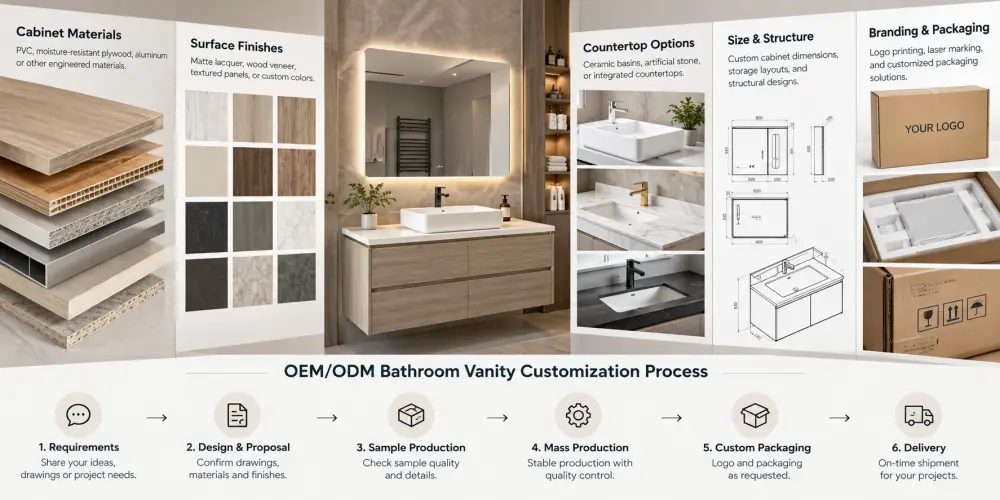
OEM/ODM Bathroom Vanity should go beyond changing a color or adding a logo. For B2B projects, useful customization may involve dimensions, storage layout, cabinet structure, basin configuration, finishes, and packaging.SEGA works with buyers to adapt these specifications to their target market or project, making customization more useful for private-label brands, distributors, and developers.
Quality Control That Protects Repeat Orders
The biggest concern after the first order is often not whether the sample is good, but whether the next batch will remain the same. Consistent materials, dimensions, finishes, and assembly quality are essential for wholesalers and project buyers who reorder the same product. A structured production and inspection process helps identify deviations before products leave the factory, reducing the risk of inconsistent batches, installation complaints, and unnecessary after-sales costs.


Coordinated Supply for Complete Bathroom Projects
A bathroom vanity is rarely purchased in isolation for a complete project. Buyers may also need matching basins, toilets and mirrors, and coordinating these products through multiple suppliers can create differences in dimensions, finishes, packaging and delivery schedules. SEGA can coordinate armoires de salle de bains with other sanitary ware products, giving B2B buyers a more streamlined sourcing process and making it easier to maintain a consistent bathroom product range.


Conclusion: Choose the Vanity Structure That Fits Your Project
There is no single best option in the Wall-Mounted vs Freestanding Bathroom Vanity comparison. Wall-mounted vanities are well suited to projects that prioritize open floor space, easy cleaning, and a modern appearance, while freestanding vanities can be a practical choice when storage capacity, floor support, or installation flexibility matters more.
For B2B buyers, the decision should go beyond the mounting style. Material, dimensions, basin configuration, hardware, installation conditions, customization requirements, and the manufacturer’s ability to maintain consistent quality in bulk production should all be evaluated before placing an order.
Si vous vous approvisionnez en wholesale bathroom vanities, contacter SEGA to discuss your project requirements. Share your preferred style, dimensions, material, and quantity, and our team can recommend a suitable configuration and provide a custom bathroom vanity solution with a factory-direct quotation.